EcoChina | Green belt project transforms Taklimakan Desert in NW China's Xinjiang
Source: Xinhua
Editor: huaxia
2026-04-18 21:35:15
An aerial drone photo shows villagers making straw checkerboard barriers in Yutian County, northwest China's Xinjiang Uygur Autonomous Region, April 15, 2026. (Xinhua/Ding Lei)
KASHGAR, April 18 (Xinhua) -- Along the southern edge of Taklimakan Desert, vibrant green barriers extend into the horizon, where fruit trees take root in and sand-fixing forests stand resilient against the desert sands, reflecting the growing ecological and economic vitality of southern Xinjiang in far western China.
From medicinal plants to flourishing fruit orchards, these initiatives are not only curbing desertification but also invigorating local industries. The integrated green network, part of the Taklimakan Desert sand-blocking green belt project, has transformed once-barren lands into hubs of sustainable growth.
Across the region, sand-based industries have expanded to 10.83 million mu (about 722,000 hectares) of desert land, generating 28.975 billion yuan (approximately 4.25 billion U.S. dollars) in annual output value.
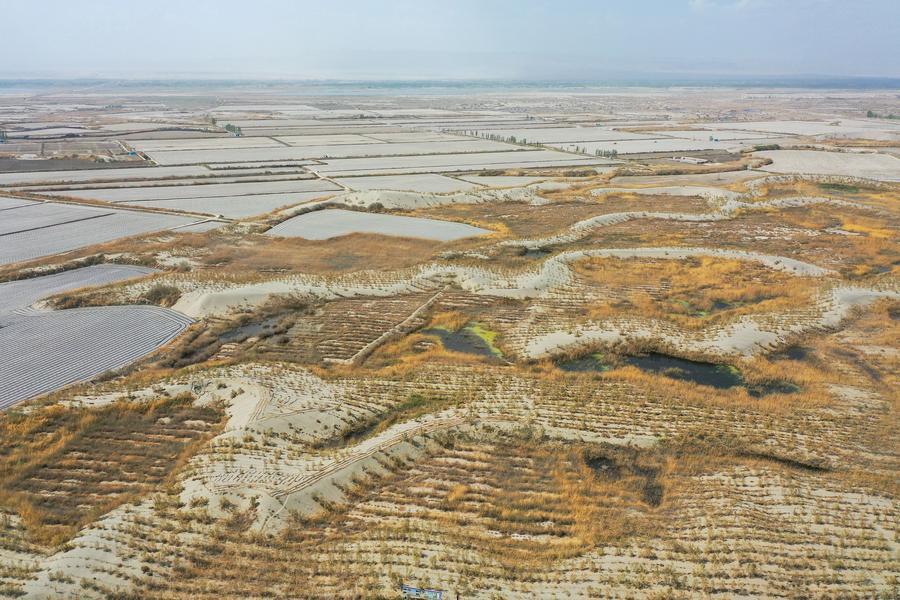
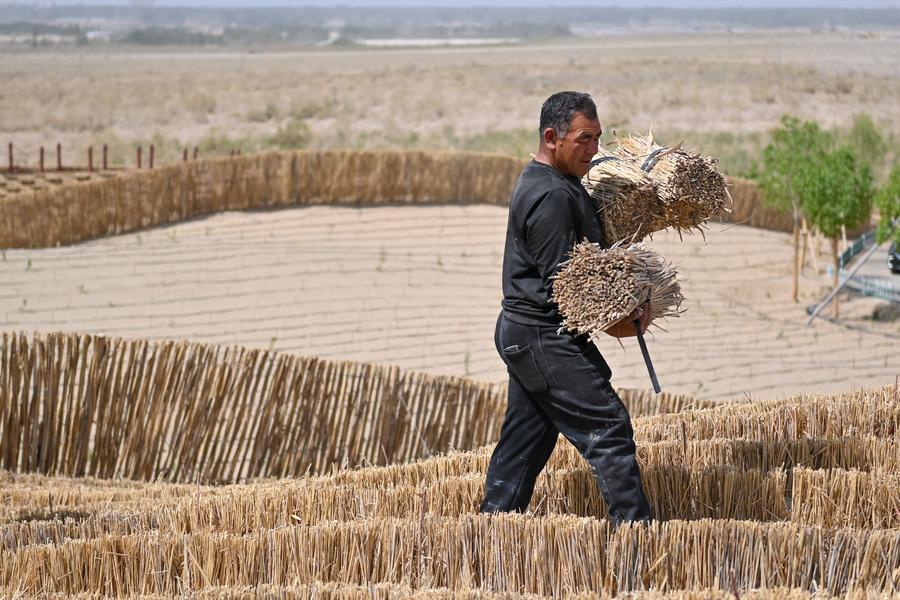
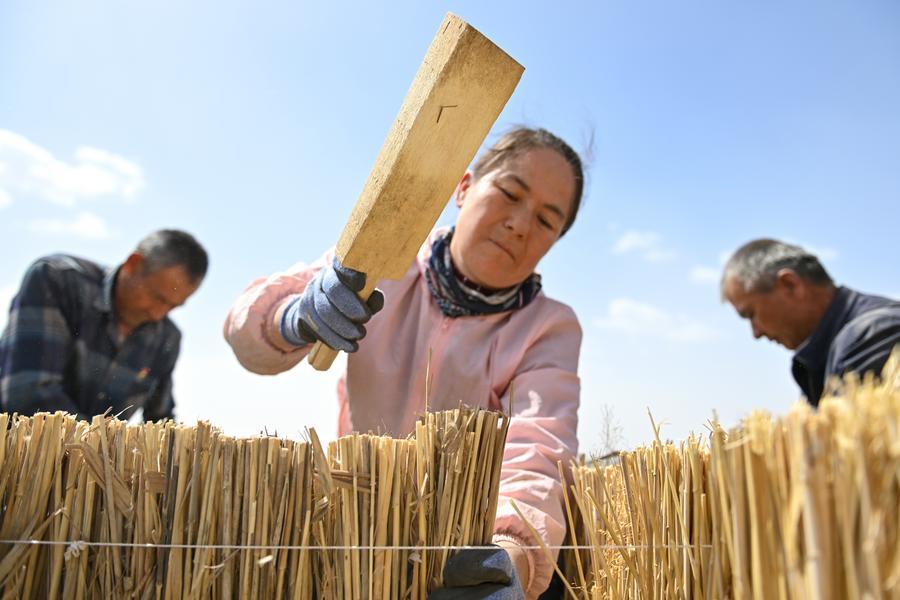
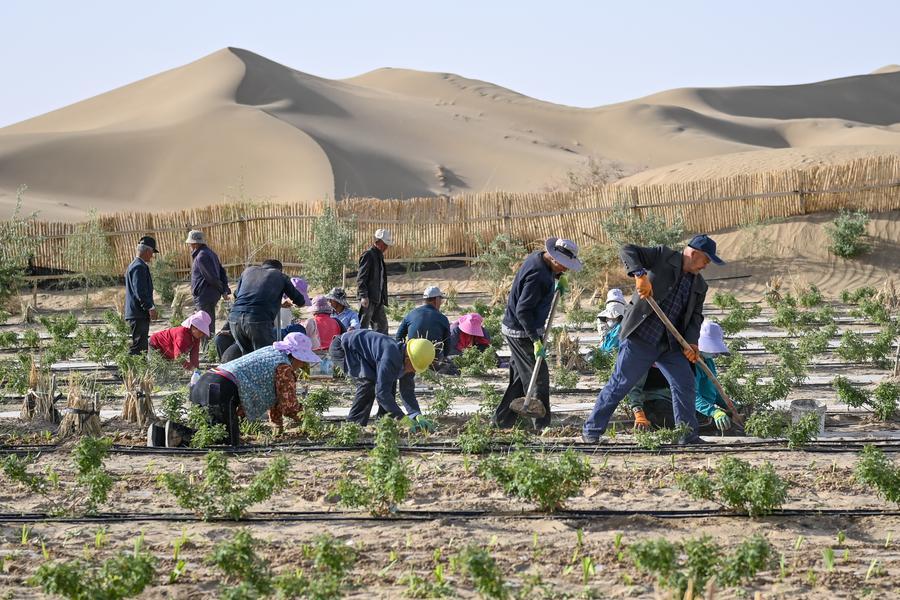
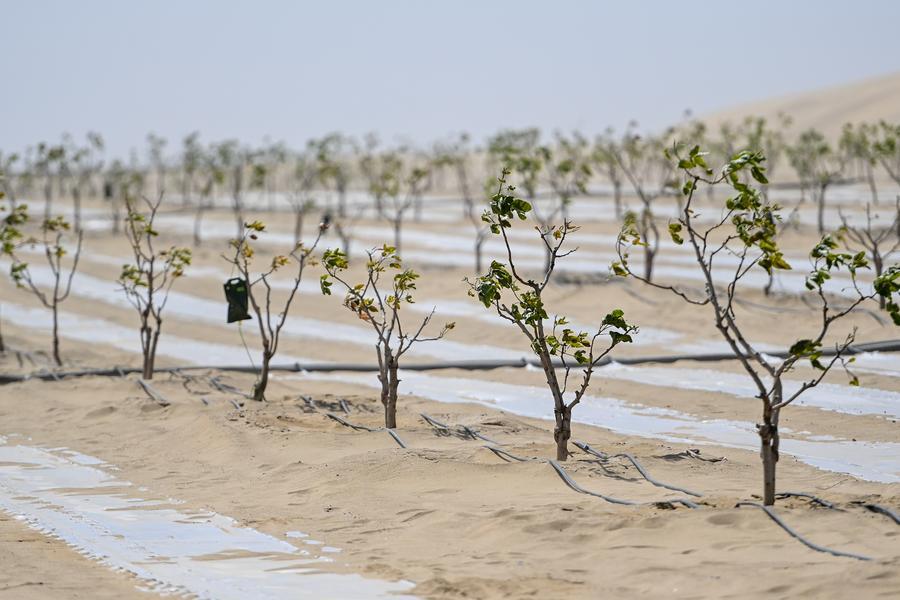
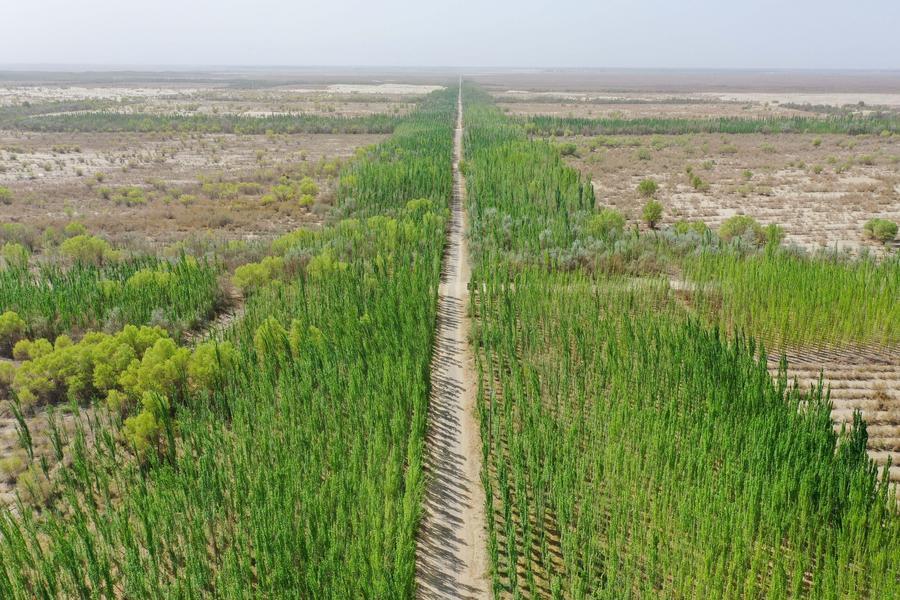
An aerial drone photo shows a view of an ecological restoration and sand control project in Awat County, northwest China's Xinjiang Uygur Autonomous Region, April 14, 2026. (Xinhua/Ding Lei)A villager plants Belamcanda chinensis, a plant used in traditional Chinese medicine, in Yutian County, northwest China's Xinjiang Uygur Autonomous Region, April 15, 2026. (Xinhua/Ding Lei)A villager carries dry reeds to be made for straw checkerboard barriers on the Taklimakan Desert in Yutian County, northwest China's Xinjiang Uygur Autonomous Region, April 15, 2026. (Xinhua/Ding Lei)Villagers make straw checkerboard barriers in Yutian County, northwest China's Xinjiang Uygur Autonomous Region, April 15, 2026. (Xinhua/Ding Lei)Villagers plant Belamcanda chinensis, a plant used in traditional Chinese medicine, at a rose garden in Yutian County, northwest China's Xinjiang Uygur Autonomous Region, April 15, 2026. (Xinhua/Ding Lei)This photo taken on April 16, 2026 shows pistachio tree seedlings at the Taklimakan Desert in Hotan County, northwest China's Xinjiang Uygur Autonomous Region. (Xinhua/Ding Lei)Villagers transplant roses and Scutellaria baicalensis, a plant used in traditional Chinese medicine, and lay drip irrigation tapes on the Taklimakan Desert in Yutian County, northwest China's Xinjiang Uygur Autonomous Region, April 15, 2026. (Xinhua/Ding Lei)A drone photo taken on April 17, 2026 shows a shelterbelt in Makit County, northwest China's Xinjiang Uygur Autonomous Region. (Xinhua/Ding Lei)A drone photo taken on April 14, 2026 shows an apple orchard at a rural cooperative in Aksu City, northwest China's Xinjiang Uygur Autonomous Region. (Xinhua/Ding Lei)■














Comments